
Vacuum Ovens · Overview
Gentle, Contamination-Free Drying
Lakshmi Vacuum Technologies builds vacuum ovens for drying, curing, baking and degassing materials that an air oven would damage or contaminate. Pulling vacuum lowers the boiling point of moisture and solvents, so they come off at 40–80°C instead of near 100°C — fast drying without thermal damage.
With the oxygen removed there is no oxidation and no residue to clean afterwards, which is why the same chamber suits PCBs, medical devices, composite assemblies, polymers and battery components.
Chambers run from 25 L bench units to 500 L floor-standing ovens, with SS304/SS316 interiors, adjustable shelves and PID or programmable touchscreen control — PLC and IPC/SCADA logging where the process needs a traceable record.
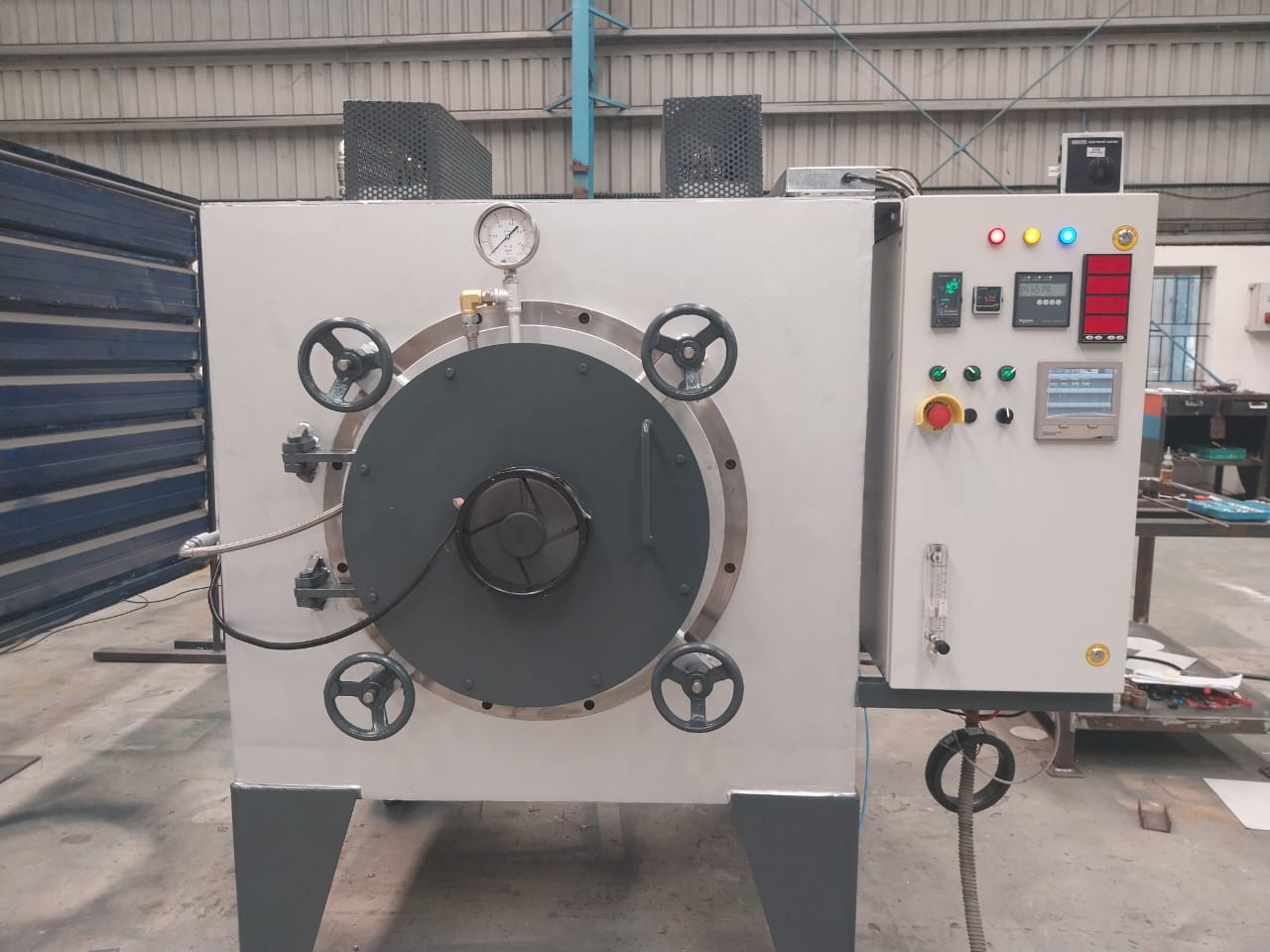 Chambers 25–500 L · PID control
Process
How a Vacuum Oven Cycle Runs
Load & Pump Down
Parts load onto adjustable shelves and the chamber pumps down to 10⁻³–10⁻⁵ mbar. Oxygen and moisture leave with the air.
Heat & Dry
Uniform electric heaters raise the chamber to the set temperature; PID control holds it while vacuum pulls the solvent or moisture out at a temperature the part can take.
Cool & Release
The load cools under vacuum, so it cannot re-absorb moisture on the way out, then the chamber vents for unloading.
Technical Specifications
Built to Your Load, Sized to Your Chamber
Chamber size, temperature range and vacuum level are configured to the load. Send your material and load size for a configured quotation.
Applications
What Our Vacuum Ovens Are Used For
Electronics & PCBs
Moisture removal and curing for boards, components and assemblies where oxidation and residue are unacceptable.
Medical Devices
Low-temperature drying, baking and ageing of heat-sensitive devices and laboratory samples.
Aerospace Composites
Precision drying and curing of composite and electronic assemblies for flight hardware.
Polymers
Degassing, annealing and moisture conditioning of polymer parts without thermal degradation.
Battery Components
Drying of electrodes and cell components in a clean, oxygen-free environment.
R&D & Pilot Lines
Repeatable low-temperature processing for development work and small production runs.
Why Vacuum Drying
The Case for Drying Under Vacuum
Dries at Lower Temperature
Vacuum lowers the boiling point, so moisture and solvents leave at 40–80°C instead of near 100°C - no thermal damage to the part.
No Oxidation, No Residue
With the oxygen removed there is nothing to oxidise the surface and nothing left behind to clean off afterwards.
Uniform Heat, Logged
Uniform electric heaters with PID control, and PLC/SCADA logging where the process needs a traceable record.
25 L to 500 L
Bench-sized chambers and 500 L floor units on the same platform, so a process proven small scales up.
FAQs
Frequently Asked Questions
What is a vacuum oven used for?
Drying, curing, baking and degassing materials that would be damaged or contaminated by an air oven - electronics, medical parts, composites, polymers and laboratory samples. Vacuum lets the moisture or solvent leave at a much lower temperature.
Why dry materials under vacuum instead of in an air oven?
Because lowering the pressure lowers the boiling point. Water and solvents come off at 40-80 C instead of near 100 C, so heat-sensitive parts dry without thermal damage - and with no oxygen in the chamber there is no oxidation or residue.
Which materials and components can be processed?
PCBs and electronic assemblies, medical devices and laboratory samples, composite and flight-hardware assemblies, polymers, battery electrodes and cell components, and any part where residue or oxidation cannot be tolerated.
What construction and controls do you provide?
SS304 or SS316 interiors with adjustable, removable shelves; uniform electric heaters with PID control, and a digital PID or programmable touchscreen controller, with PLC and IPC/SCADA logging where the process needs it.
What chamber sizes and vacuum levels are available?
Chambers run from 25 L to 500 L, with vacuum levels of 10-3 to 10-5 mbar and a temperature range of ambient to 250 C or 400 C. Size, temperature and vacuum are configured to the load.
Can we test our process before ordering?
Yes. Send the material, the load size and the temperature or vacuum limit you need to respect - our engineers will propose a cycle and arrange a trial before you commit to a specification.
Still have questions? Talk to our engineers or request a quotation.
Related Equipment