
Vacuum Degassing Furnace · Overview
Purity You Can Measure, Gas by Gas
Lakshmi Vacuum Technologies builds vacuum degassing furnaces that pull dissolved hydrogen, oxygen and nitrogen out of molten or solid metal under deep vacuum. Lowering the pressure above the charge lets those gases leave the material instead of staying locked in it — the difference between steel that passes ultrasonic inspection and steel that does not.
Heating under vacuum, holding for a controlled time and cooling without breaking vacuum means the charge never re-absorbs gas on the way out. PLC and IPC with SCADA hold the thermal profile and the vacuum level together, so each heat is repeatable and logged.
Every system is engineered to order at our Bengaluru works: working area, hot zone, pumping set, zones and cooling are configured around your alloy, charge weight and gas limits.
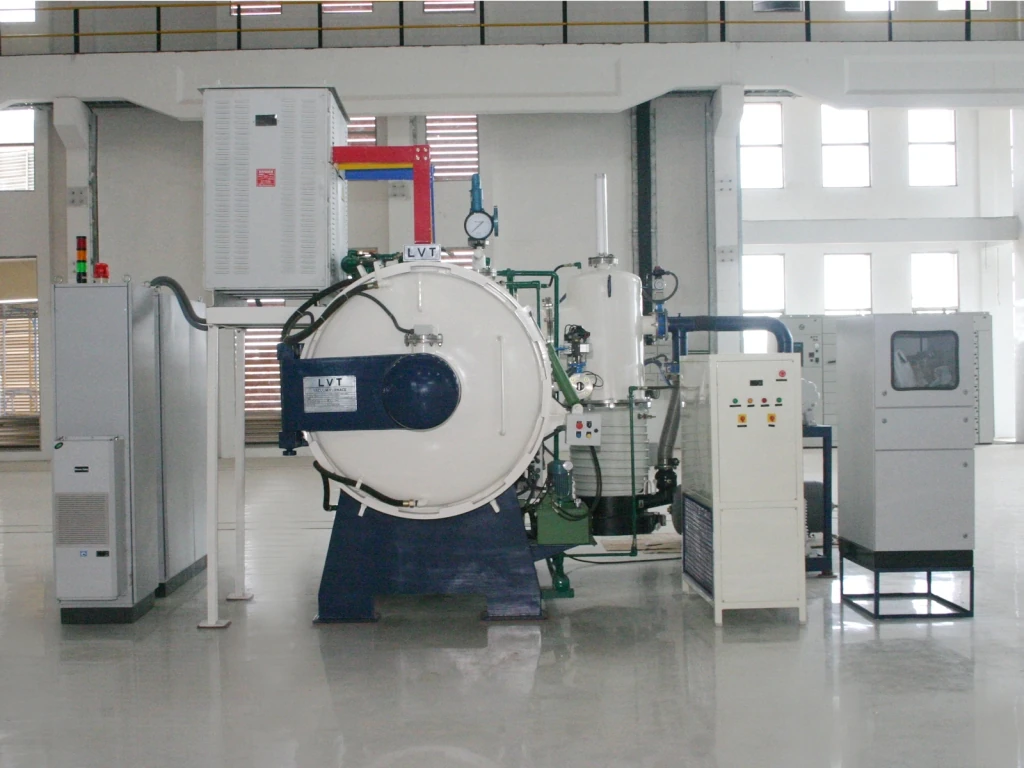 Working Area up to 900 × 900 × 1200 mm
Process
How Vacuum Degassing Works
Pump Down & Heat
The charge is heated under deep vacuum. As the pressure above the metal falls, dissolved hydrogen, oxygen and nitrogen start to leave the melt instead of staying in solution.
Hold for Gas Removal
Vacuum level, temperature and holding time are held on recipe, so the gas content falls to the limit you specified rather than to whatever the cycle happens to reach.
Cool & Release
Water-cooled coils and walls bring the charge down under vacuum, so it never re-absorbs gas on the way out. Parts unload clean and ready for casting, forging or the next operation.
Technical Specifications
Built to Your Alloy, Sized to Your Charge
Working area, hot zone, pumping set and cooling are matched to your process. Send your alloy and gas limits for a configured quotation.
Applications
Where Degassing Is Critical
Aerospace Flight Parts
Removal of dissolved gases to prevent embrittlement and fatigue failure in flight-critical parts.
Steel Before Casting or Forging
Cleaner steel with improved mechanical properties before the ingot is cast or forged.
Nickel & Cobalt Superalloys
High-integrity processing for nickel and cobalt based alloys used in hot sections.
Titanium & Reactive Metals
Titanium, zirconium and similar metals kept contamination-free through the whole cycle.
Critical Rotating Parts
Shafts, discs and rings where gas porosity or embrittlement cannot be tolerated.
Vacuum-Melted Ingots
Degassing ahead of remelting or casting so the final chemistry is not compromised by residual gas.
Why Vacuum Degassing
The Case for Degassing Under Vacuum
Purity You Can Measure
Hydrogen, oxygen and nitrogen are driven out under vacuum, so the gas content is measured before release rather than assumed.
Deep, Stable Vacuum
A pumping set sized for your charge holds 1 x 10⁻⁴ mbar (10-6 optional) through the hold, not just at the start.
Recipe-Level Control
PLC, IPC and SCADA log temperature and vacuum for every heat, so the cycle is repeatable and auditable.
No Re-Absorption on Cooling
Water-cooled coils and walls cool the charge under vacuum, so it cannot pick gas back up on the way down.
FAQs
Frequently Asked Questions
What does vacuum degassing remove?
Dissolved hydrogen, oxygen and nitrogen. Under deep vacuum the partial pressure of those gases above the melt drops, so they leave the metal instead of staying in solution - which is what causes porosity, embrittlement and scattered mechanical results.
Why is hydrogen removal so important?
Hydrogen is the main cause of flakes and delayed cracking in heavy forgings and of embrittlement in high-strength steels. Degassing under vacuum brings hydrogen down before it can do that, which is why flight-critical and heavy-section parts are degassed as a matter of course.
Which metals are typically degassed?
Carbon and alloy steels before casting or forging, nickel and cobalt based superalloys, titanium and zirconium, and other reactive or high-integrity alloys where gas porosity cannot be tolerated.
How is the process controlled?
PLC and IPC with SCADA hold the thermal profile and the vacuum level, and log both, so a heat is repeatable and traceable. Vacuum pumping, holding time and cooling are recipe parameters, not operator judgement.
What vacuum level can the furnace reach?
Typically 1 x 10⁻⁴ mbar, with 10-6 mbar available where the alloy or the specification calls for it. The pumping set is sized for your charge weight and outgassing load.
Can we trial our material first?
Yes. Send the alloy, the gas limits you need to hit and the section size - our engineers will propose a cycle and arrange a trial before you commit to a furnace specification.
Still have questions? Talk to our engineers or request a quotation.
Related Equipment