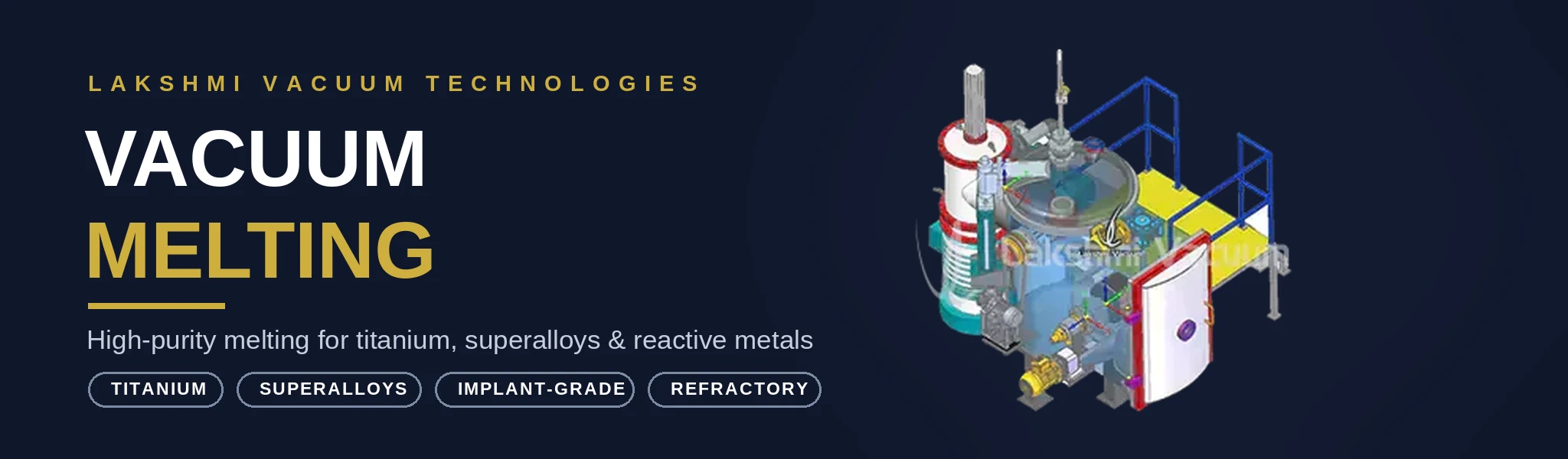
Vacuum Melting Furnace · Overview
High-Purity Melting, Two Proven Platforms
Lakshmi Vacuum Technologies builds vacuum melting furnaces in two configurations. Induction melting (VIM) heats an alloyed charge in a graphite, alumina or zirconia crucible at 1–10 kHz, giving chemistry control and degassing in one step. Arc melting strikes onto a water-cooled copper hearth at up to 3500°C, so titanium, zirconium and refractory metals never touch a ceramic crucible.
Both run under high vacuum or argon. Melting at 1×10⁻⁴ mbar (induction) or 1×10⁻⁶ mbar (arc) pulls hydrogen, oxygen and nitrogen out of the melt and keeps air away from it, which is what keeps inclusion levels low enough for aerospace and implant work.
Capacity runs from 100 g arc buttons for alloy development to 500 kg induction heats for production — configured to your alloy, crucible and casting arrangement.
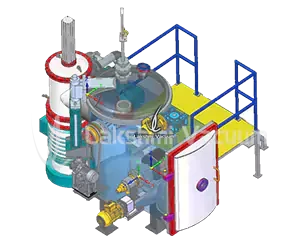 VIM 1–500 kg · Arc 100 g–2 kg
Process
How Vacuum Melting Works
Melt Under Vacuum
Induction coils heat the charge in a graphite, alumina or zirconia crucible at 1–10 kHz; the arc platform strikes onto a water-cooled copper hearth instead, so reactive melts never touch ceramic.
Refine & Degas
At 1×10⁻⁴ mbar (induction) or 1×10⁻⁶ mbar (arc) oxygen, nitrogen and hydrogen leave the melt. Inert-gas purging is available where the alloy calls for it.
Cast or Solidify
The melt is poured into a water-cooled copper mould, or solidified on the hearth for button and ingot samples. PLC and SCADA log power, melt rate, temperature and vacuum for the heat.
Technical Specifications
Both Platforms, One Specification Sheet
Capacity, crucible material, frequency, pumping set and casting arrangement are configured to your alloy. Send your alloy and charge weight for a configured quotation.
Applications
Where Vacuum Melting Is Used
Titanium & Zirconium
Reactive melts processed on the copper hearth, with no ceramic crucible to contaminate the charge.
Nickel & Cobalt Superalloys
Alloyed heats for turbine and engine components, with chemistry held to specification.
Implant-Grade Alloys
High-purity melting for medical implant materials where inclusion content is critical.
Precision Castings
Ingots and castings for structural and engine parts that go straight into service.
Alloy Development
100 g to 2 kg arc melts and small induction heats for new chemistries and process research.
Refractory Metals
Arc melting of high-melting-point metals that no crucible can hold without contamination.
Why Vacuum Melting
The Case for Melting Under Vacuum
No Oxidation, No Contamination
Melting under vacuum or argon keeps oxygen away from the melt, so inclusions stay out of the ingot.
Gas Removal Built In
Deep vacuum pulls hydrogen, oxygen and nitrogen out during the melt - degassing is part of melting, not a separate step.
Chemistry Held to Spec
Induction stirring plus PLC/SCADA power and temperature control keep alloy chemistry uniform through the heat.
100 g to 500 kg, One Supplier
The same platform family covers arc buttons for alloy development and 500 kg induction heats for production.
FAQs
Frequently Asked Questions
What is the difference between VIM and arc melting?
VIM melts the charge by induction inside a crucible, so you get alloy chemistry control and gas removal in one step - the usual route for superalloys and steels. Arc melting strikes an electric arc onto the charge in a water-cooled copper hearth, reaching 3500 C, which is how titanium, zirconium and refractory metals are melted without a ceramic crucible to contaminate them.
Which materials are typically melted?
Titanium and zirconium, nickel and cobalt superalloys, implant-grade alloys, refractory and reactive metals, and special steels. For reactive melts the arc platform avoids crucible contact; for alloyed heats the induction platform gives chemistry control.
What purity levels can be achieved?
Melting under 1 x 10⁻⁴ mbar (induction) or 1 x 10⁻⁶ mbar (arc) removes oxygen, nitrogen and hydrogen from the melt and keeps the charge out of contact with air, so inclusion and gas levels stay low enough for aerospace and implant work.
How are melting parameters controlled?
PLC and IPC with SCADA hold power, melt rate, temperature and vacuum, and log them for the heat. Induction frequency is adjustable from 1 to 10 kHz to suit the charge and crucible.
Do you support ingot or casting production?
Yes. Both platforms are built for ingot or casting output, with water-cooled copper moulds or hearths as the configuration requires, and the crucible or hearth is sized to your charge.
Can we discuss a custom configuration?
Yes. Capacity from 1 kg to 500 kg on the induction platform and 100 g to 2 kg on the arc platform, with crucible material, frequency, pumping set and casting arrangement configured to your alloy.
Still have questions? Talk to our engineers or request a quotation.
Related Equipment