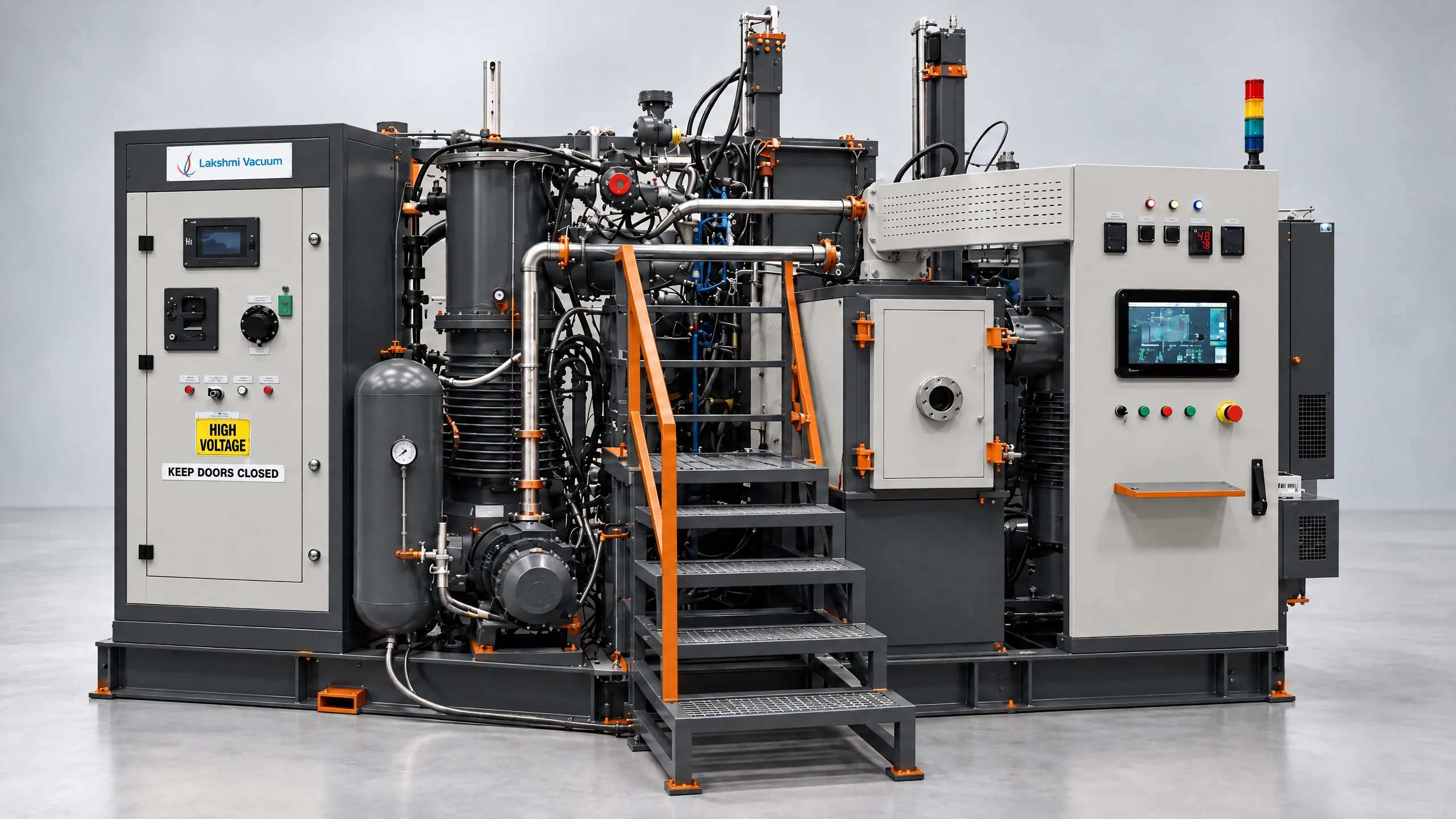
Strip casting makes the alloy feedstock for NdFeB magnets in EV motors, the thin ribbon for amorphous metal transformer cores, the Sm-Co alloy for aerospace magnets, and the soft magnetic materials used in semiconductor power electronics. Multiple industries depend on it — but most manufacturers face real problems getting good strip cast alloy and furnaces without depending on one country.
The Problem: What Manufacturers Face
Supply chain risk
China made 94% of global magnets in 2024 (IEA). Most strip casters are also imported.
Quality inconsistency
Bad strip = bad magnets. Soft iron, coarse grains, uneven composition. Wasted batches.
Heavy RE cost
Dy and Tb are expensive. Poor strip needs more. Better strip needs less. Direct bottom-line impact.
Equipment dependency
Imported furnace = 6-12 month lead. No local service. Spares cross borders.
Scale-up gap
R&D from one supplier, production from another. Different recipes, different quality.
The Solution: How Strip Casting Solves It
Why strip casting, not ingot: Slow cooling gives large, uneven crystals and soft iron. Rapid cooling on a copper wheel keeps crystals small, suppresses soft iron, and gives uniform composition throughout.
Why vacuum, not air: Rare-earth elements oxidise at melt temperature. Vacuum keeps oxygen out, producing cleaner alloy with fewer defects — a requirement for automotive and aerospace grade magnets.
Better microstructure
Fine, uniform grains with suppressed soft iron. Why every major magnet producer switched from ingot casting.
Lower RE cost
Same coercivity target with less Dy or Tb. Direct material cost saving per tonne.
Fewer rejects
Vacuum keeps oxygen low. Recipe control keeps parameters repeatable. Higher yield.
Scalable platform
10 kg pilot to 500 kg+ production. Same team, same recipe logic. No supplier change.
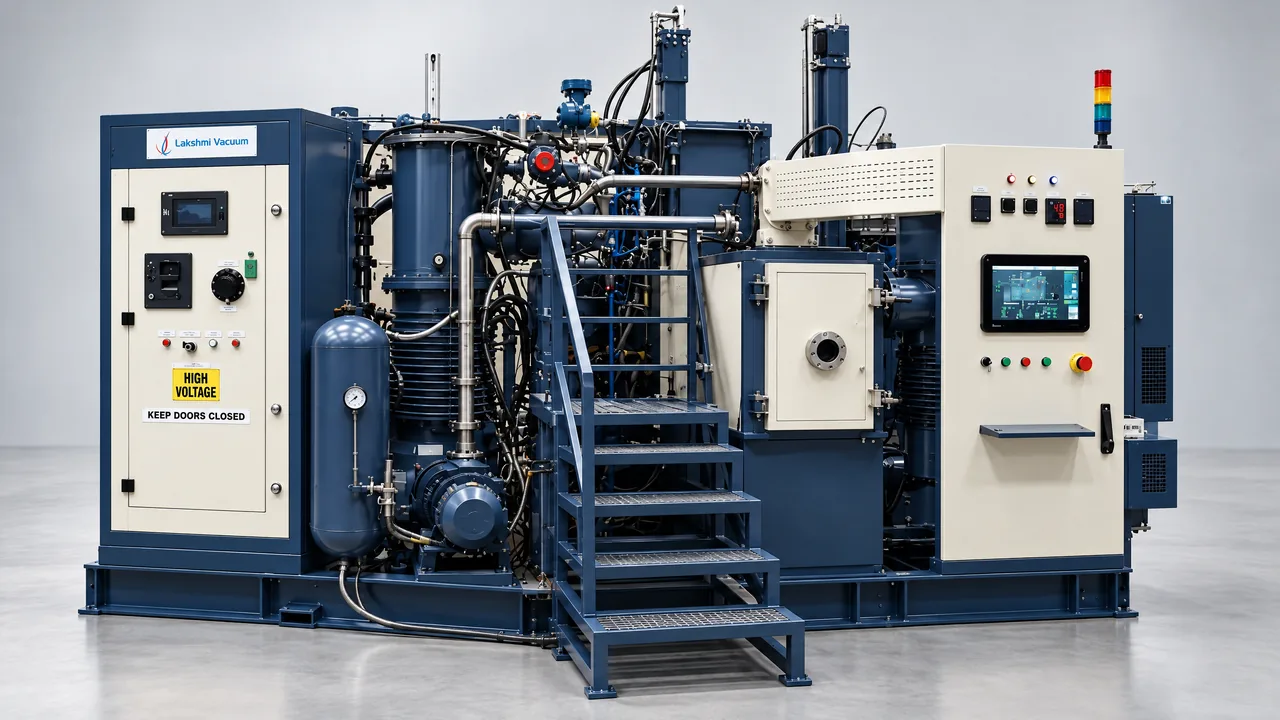
Key Takeaway: The strip caster sets the ceiling on what your line can produce and the floor on how much it costs. For full specifications, see our Vacuum Strip Casting Furnace product page.
Industries That Benefit
Strip casting feeds more industries than most people realise — not just magnets:
Electric Vehicles
NdFeB in traction motors, sensors, actuators. Every EV uses 1–2 kg of NdFeB.
Wind & Solar
Tonnes of NdFeB per wind generator. Solar tracking and inverters also need strip cast alloy.
Grid & Transformers
Amorphous metal ribbon cuts transformer losses by 60–70%. Grid modernisation driving adoption.
Consumer Electronics
Speakers, HDD, wireless charging, sensors — all NdFeB from strip cast alloy.
Chip Manufacturing
Amorphous and nanocrystalline cores for fab power supplies, DC-DC converters, EMI filters and current sensors. India Semiconductor Mission driving fab investment.
Flight-Critical Magnets
Sm-Co for actuators, sensors, guidance systems. High-temp performance required.
Robotics & Motors
Servo motors, stepper motors, robotic joints, compressors. Factory automation scaling.
Medical Devices
MRI, surgical robots, implants. Sm-Co where biocompatibility and temperature stability matter.
R&D & Academia
Universities and labs developing new magnetic materials and AM feedstock.
The Market Opportunity
- EV: Production doubling every 2–3 years. Every EV uses 1–2 kg of NdFeB.
- Wind: 600–800 kg of NdFeB per direct-drive turbine. Offshore scaling globally.
- Grid: Amorphous transformers cut losses 60–70%. India replacing millions of units.
- Semiconductor: India Semiconductor Mission attracting fab investment. Strip cast soft magnetics for fab power supplies and EMI filtering.
- India magnet capacity: 6,000 tonnes of NdFeB under ₹7,280 crore scheme, 20 bids (PIB, ANI). Every tonne needs a strip caster.
Why Lakshmi Vacuum
We solve the problems above. Built in Bengaluru since 2003 — 450+ furnaces delivered to 9 countries. Design, manufacture, installation, commissioning and training all in-house.
Frequently Asked Questions
No. Also produces amorphous ribbon for transformer cores, EMI filters and semiconductor power electronics, Sm-Co for aerospace, and prototype strip for R&D.
Freezes alloy in milliseconds — small uniform crystals, suppressed soft iron, even grain boundaries. Ingot casting gives coarse grains and more impurities.
Rare-earth elements oxidise at melt temperature. Vacuum keeps oxygen out — a requirement for automotive and aerospace grade magnets.
EV, wind, power distribution, electronics, semiconductor, aerospace, robotics, medical, R&D, and rare-earth refiners.
Better microstructure = higher coercivity with less Dy or Tb. Significant material cost saving per tonne.
Long lead times, overseas service, spares cross borders. We build in India with local engineering and support.
10 kg pilot to 500 kg+ production. See product page.
Yes — 9 countries, with installation, commissioning and training by our own team.
Send your alloy and output via our RFQ page. An engineer replies with a configured proposal.
Ready to Specify Your Strip Casting Furnace?
Send your alloy, charge size and output target via our RFQ page.
Request a Quote