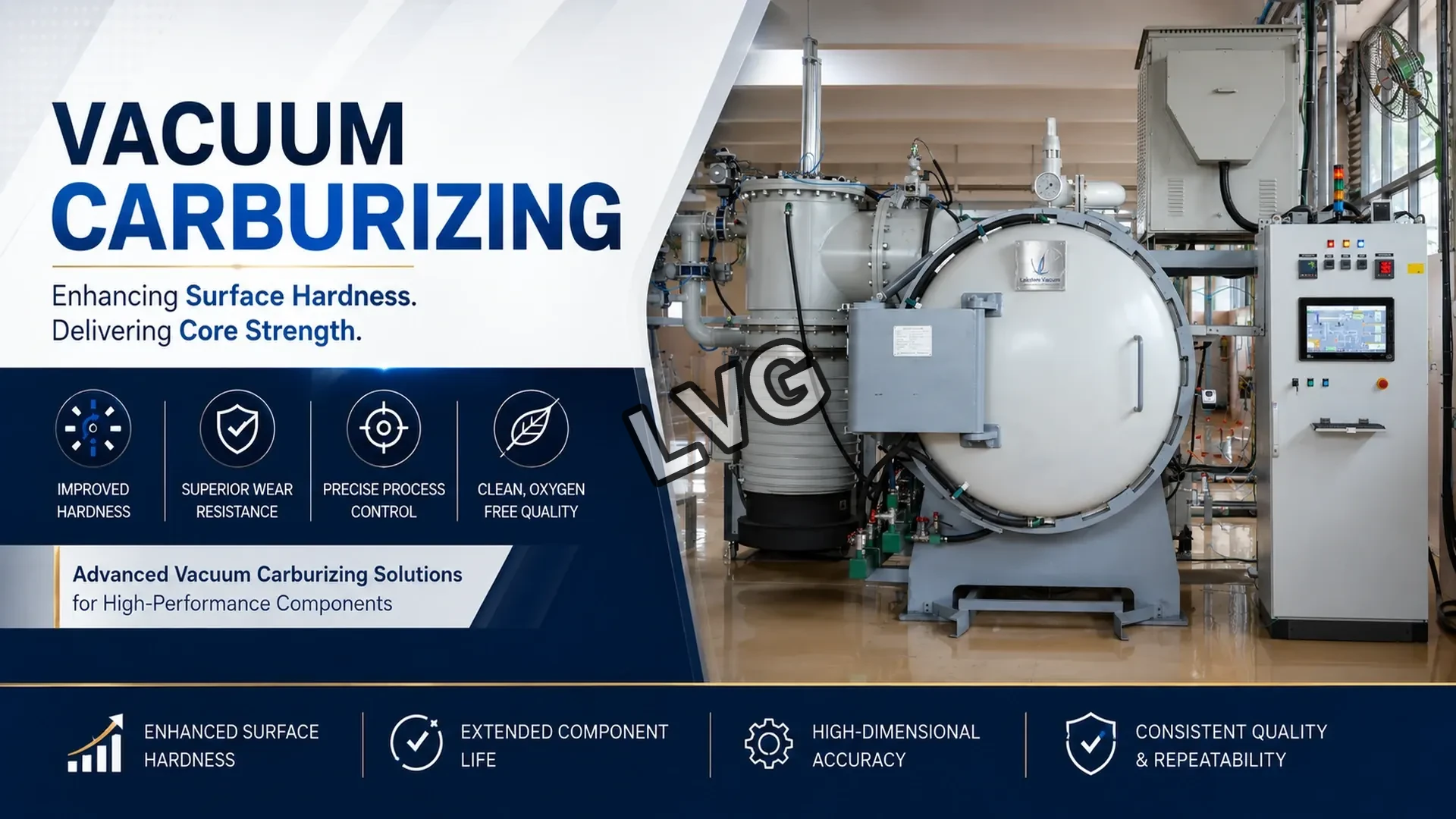
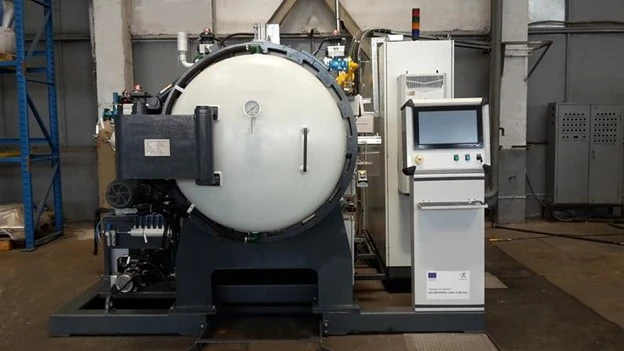
Selecting the right vacuum furnace for your industry is a critical engineering decision in modern vacuum heat treatment operations. As a leading industrial furnace manufacturer, we understand that even minor deviations in temperature uniformity, vacuum level, or quenching rate can lead to metallurgical defects, distortion, or component failure.
With decades of experience serving the sector, Lakshmi Vacuum Technologies Pvt. Ltd has witnessed how a mis-specified furnace can become a bottleneck, turning a profitable production line into a source of constant rework and scrap. A vacuum furnace operates under reduced pressure—often reaching levels as low as 10−5 mbar—eliminating oxidation and contamination during high-temperature processing.
For a deeper understanding of the vacuum heat treatment process and metallurgical transformations, refer to our detailed technical resources.
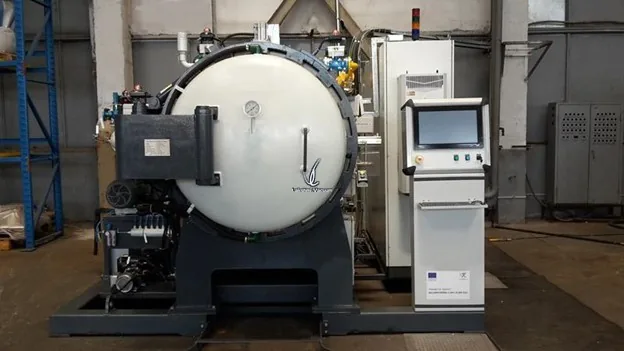
Vacuum Furnace Fundamentals and Working Principle
A vacuum furnace uses a controlled low-pressure environment to process materials without atmospheric interference. Unlike conventional furnaces, where convection dominates, the vacuum furnace working principle relies primarily on radiative heat transfer.
No oxidation — Parts remain free from surface oxides
No decarburization — Surface carbon content is preserved
Improved surface integrity — Bright, clean finish post-treatment
| Parameter | Specification |
|---|---|
| Temperature Range | 800°C to 2000°C |
| Vacuum Levels | 1 mbar to 10−6 mbar |
| Heat Transfer | Radiation dominant |
| Atmosphere | Oxygen-free |
Vacuum Furnace Selection Criteria
1. Process Requirements
Your specific vacuum heat treatment process defines the furnace. Each process demands distinct capabilities:
- Hardening: Rapid quenching required for martensitic transformation
- Brazing: Uniform heating required for consistent joint formation
- Sintering: High thermal stability required for powder metallurgy
Common materials processed include tool steels (H13, D2), titanium alloys, and superalloys (Inconel).
2. Temperature Capability
Engineering best practices always advise maintaining a +50°C safety margin above your required temperature.
- Graphite heaters: High temperature capability up to 2000°C+
- Molybdenum heaters: Clean processing, suitable for bright annealing
- All Metal Nichrome Heaters: Ensure clean environment for lower process temperatures
3. Vacuum Level Selection
| Vacuum Type | Range | Application |
|---|---|---|
| Rough | 1 to 10−2 mbar | Cleaning & degassing |
| Medium | 10−2 to 10−4 mbar | Vacuum Heat treatment |
| High | <10−4 mbar | Aerospace & specialty alloys |
4. Cooling and Quenching System
The quenching system defines your final metallurgical outcome. Gas quenching options include:
- Nitrogen: Standard choice for most steel applications
- Helium: High performance quenching for dense workloads
- Argon: For reactive metals like titanium
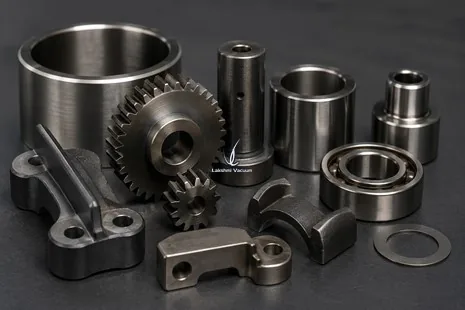
Cooling behavior follows Newton's Law of Cooling:
q = h × A × (Tsurface − Tgas)
Where q = heat transfer rate, h = heat transfer coefficient, A = surface area.
Key Takeaway: This explains why high pressure gas quenching (HPGQ) improves hardness and reduces cycle time — higher gas pressure increases the heat transfer coefficient significantly.
| Quench Gas | Heat Transfer Rate |
|---|---|
| Nitrogen | ~300–400 W/m²K |
| Helium | >1000 W/m²K |
5. Furnace Configuration
- Horizontal: General use, easy loading
- Vertical: For long components, minimal distortion
- Single chamber: Batch processing, lower investment
- Multi chamber: High production needs, continuous operation
6. Hot Zone Design
- Graphite: Cost-effective, high temperature capability
- All-metal: For clean applications, no carbon contamination
Critical for thermal uniformity and process stability — the hot zone is the heart of your vacuum furnace.
7. Automation and Control Systems
Modern industrial vacuum furnace design includes:
- PLC integration for real-time process control
- SCADA systems for remote monitoring
- Digital data logging for traceability
- Recipe automation for repeatable results
Industry-Specific Selection
| Industry | Key Requirements |
|---|---|
| Aerospace | AMS 2750 compliance, ±3°C uniformity |
| Automotive | LPC + HPGQ processes, low distortion |
| Medical | All-metal hot zone, oil-free vacuum systems |
Common Mistakes in Vacuum Furnace Selection
- Over-specifying vacuum levels beyond process needs
- Ignoring cooling rate requirements for the material
- Selecting wrong hot zone material for the application
- Poor part geometry planning leading to uneven treatment
Standards and Compliance
Adherence to international standards ensures accuracy, repeatability, and audit readiness:
- AMS 2750 — Pyrometry standard for heat treatment
- NADCAP — Aerospace industry accreditation
- ISO 9001 — Quality management system
Temperature Uniformity (AMS 2750)
| Class | Uniformity | Achieved By |
|---|---|---|
| Class 1 | ±3°C | Multi-zone heating, thermocouple calibration, PID control loops |
| Class 2 | ±5°C |
Cost vs Performance Analysis
Understanding the balance between CAPEX and OPEX is critical:
- Low-cost option: Often results in high hidden operational costs through rework, scrap, and downtime
- High-end option: Ensures better long-term ROI through reliability and consistency
Key factors to analyze: cycle time, energy usage, scrap reduction.
Engineering Checklist
- Define material and metallurgy needs
- Identify specific process requirements
- Select correct temperature range (+50°C margin)
- Choose appropriate vacuum level
- Evaluate quenching system (HPGQ)
- Check AMS/NADCAP compliance
- Analyze ROI thoroughly
Future Trends in Vacuum Furnace Technology
- AI-based process control — Predictive optimization of thermal cycles
- Industry 4.0 integration — Connected, data-driven manufacturing
- Energy-efficient systems — Reduced operational costs and carbon footprint
- Advanced quenching technologies — Faster, more uniform cooling
Conclusion
Selecting the right vacuum furnace requires expertise in Metallurgy, Heat transfer, and Process engineering. A well-chosen furnace is not just equipment—it is a competitive advantage. When you are ready to upgrade your facility, trust the expertise of Lakshmi Vacuum Technologies Pvt. Ltd to deliver precision and reliability.
Choose based on material type, temperature requirements, vacuum level, and cooling requirements. Start with your process definition and work through each selection criterion systematically.
Typically 10−2 to 10−4 mbar for most vacuum heat treatment processes. Aerospace applications may require high vacuum below 10−4 mbar.
Yes, gas quenching reduces distortion and eliminates post-cleaning steps. It provides a cleaner, more controllable cooling process ideal for precision components.
AMS 2750 is the aerospace standard for temperature accuracy and uniformity in heat treatment. It defines pyrometry requirements, instrument calibration, and furnace qualification classes.
Ready to Choose Your Vacuum Furnace?
Connect with Lakshmi Vacuum Technologies — a trusted vacuum furnace manufacturer in India — for expert guidance on the best vacuum heat treatment solutions for your facility.