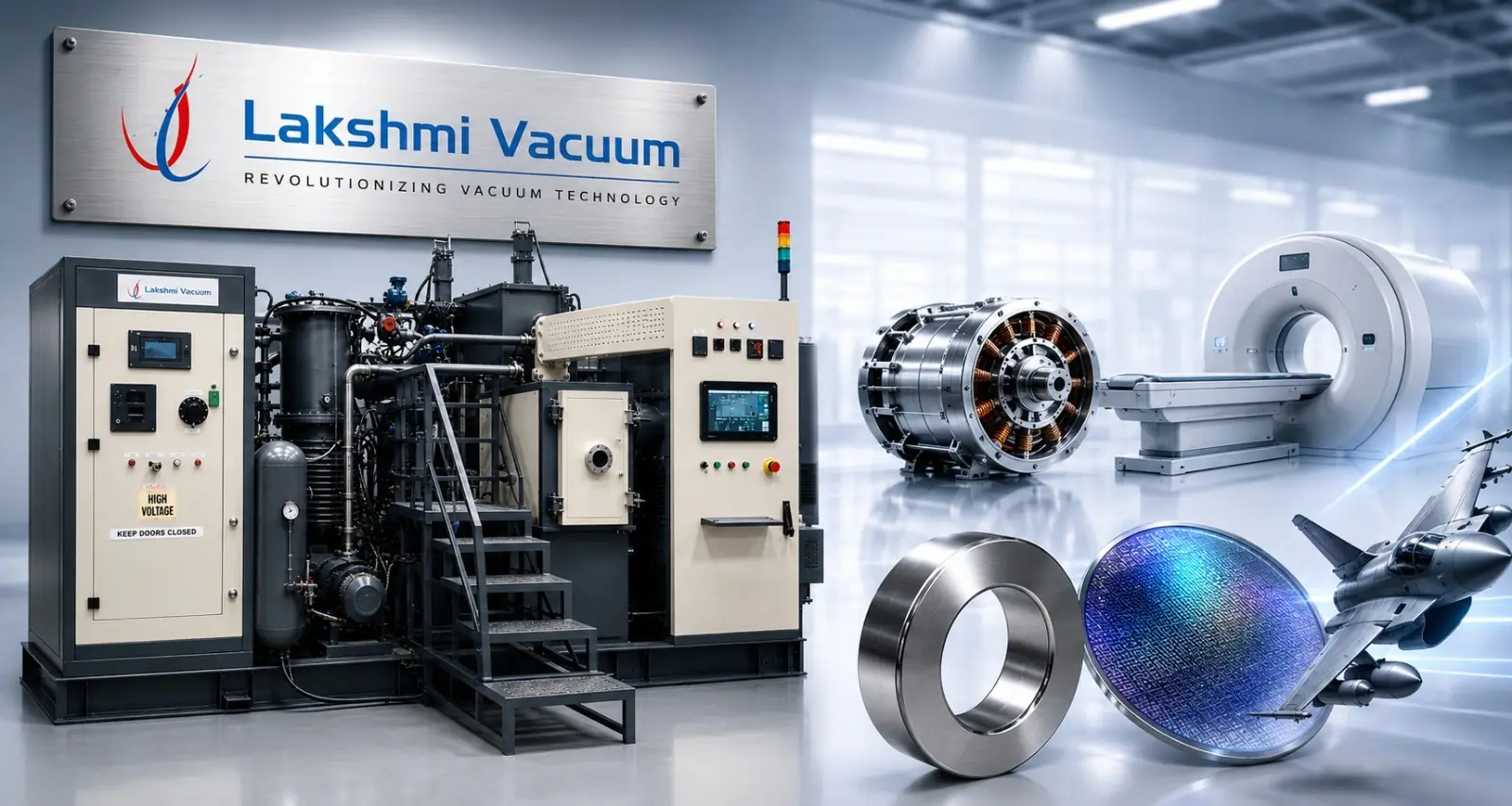
Advanced Vacuum Processing for Rare Earth Permanent Magnets
The rapid growth of electric vehicles, renewable energy systems, robotics, aerospace and advanced industrial applications is driving demand for high-performance Rare Earth Permanent Magnets. Lakshmi Vacuum Technologies Pvt. Ltd. is at the forefront of vacuum processing technology for Rare Earth Permanent Magnet manufacturing in India — with established expertise in developing and manufacturing advanced vacuum processing equipment for this strategic industry.
Complete Solutions for Rare Earth Magnet Manufacturing
Everything needed to produce world-class NdFeB magnets — engineered, built and supported by one accountable team.
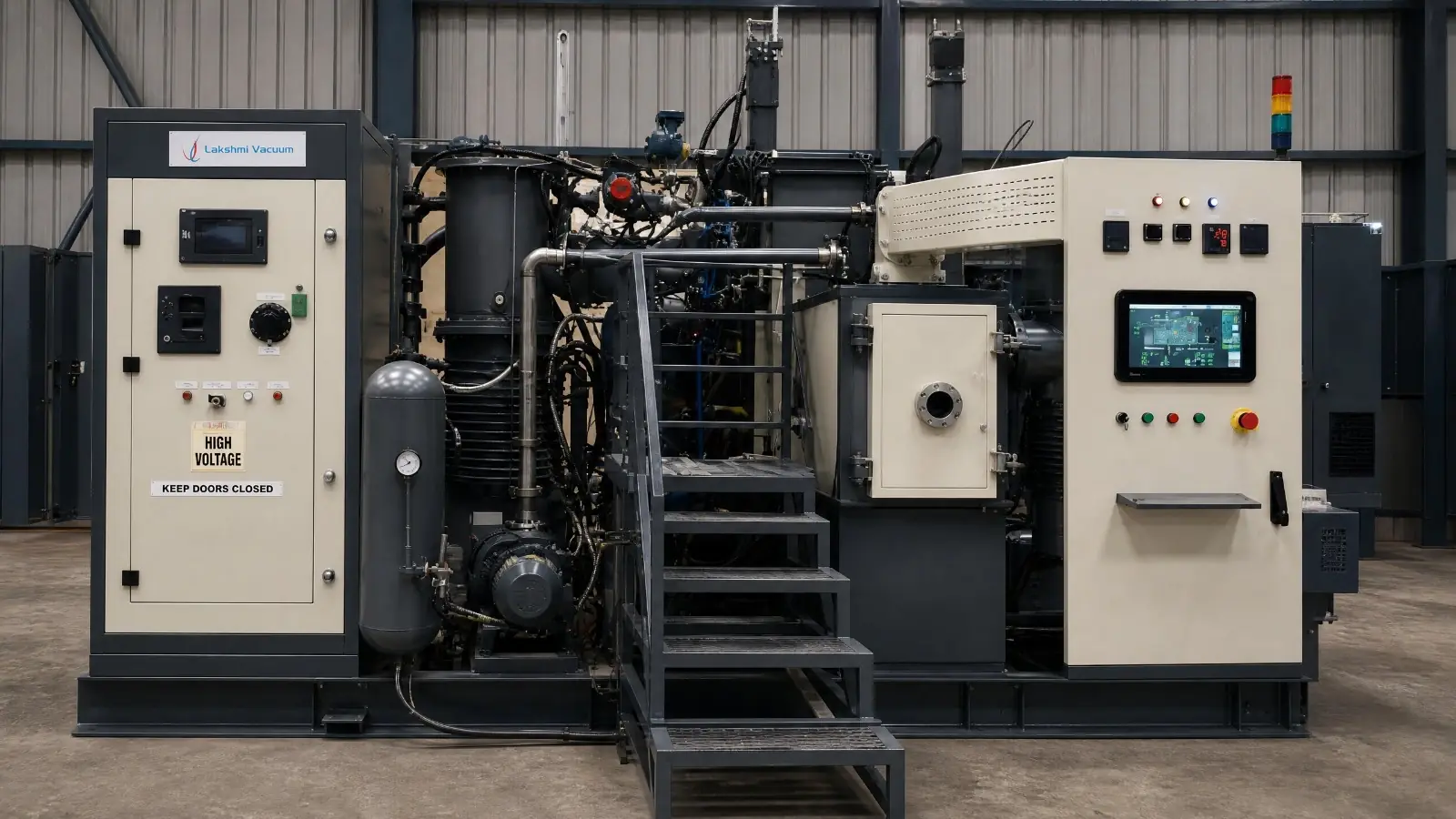
Vacuum Strip Casting Furnace
Converts rare earth alloy into uniform strip with the ideal microstructure for powder processing.
View details
Vacuum Sintering Furnace
High-temperature sintering that delivers full density and stable magnetic performance.
View details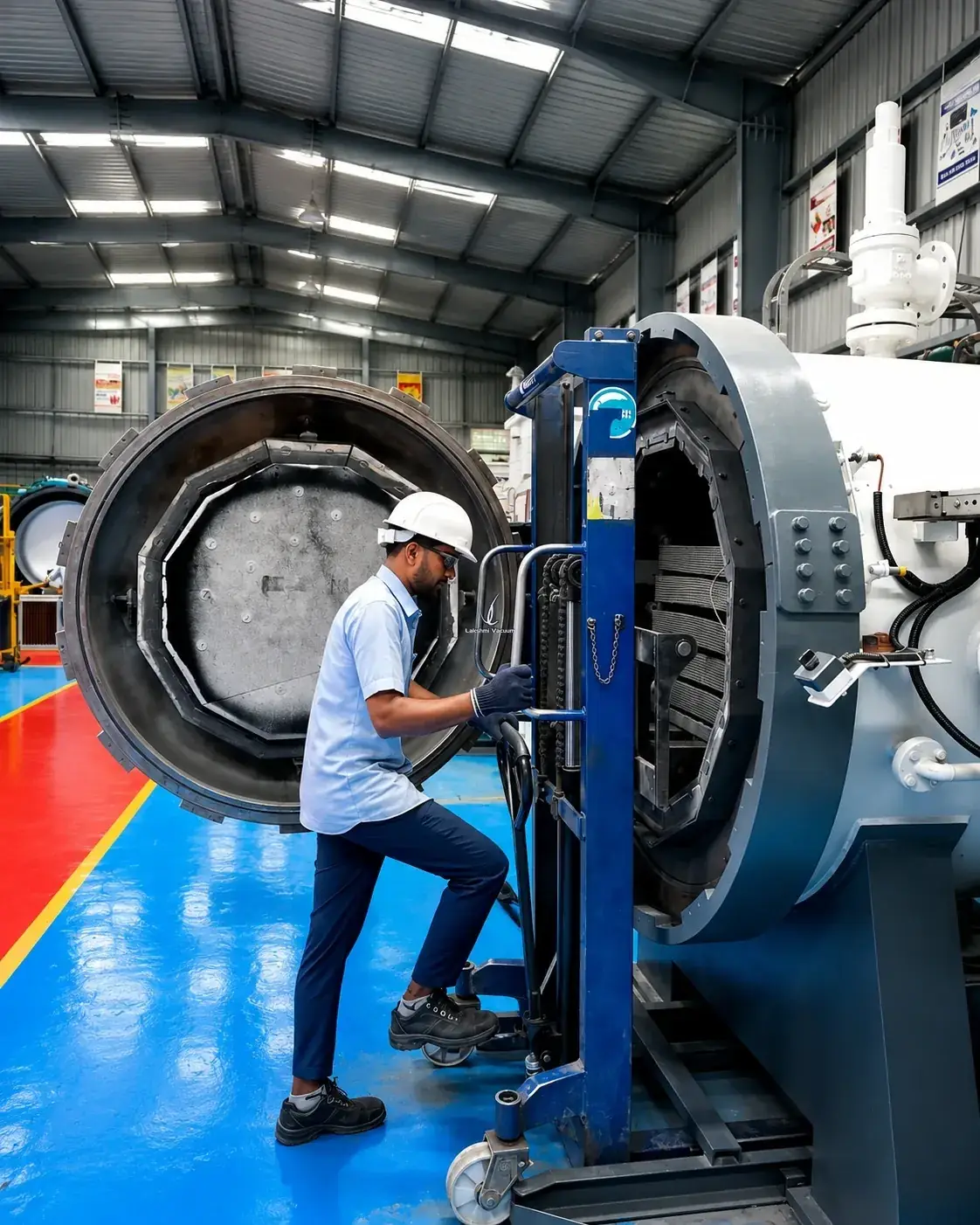
Vacuum Heat Treatment
Complete vacuum heat treatment support through 9+ service centres across India.
View details
Vacuum Strip Casting Furnace
The production of high-performance NdFeB magnets begins with the preparation of a homogeneous NdFeB alloy and its conversion into a controlled microstructure suitable for subsequent powder processing. Our Vacuum Strip Casting Furnace is designed for controlled melting and rapid strip casting of Rare Earth alloy compositions.
- High-purity vacuum / inert atmosphere processing
- Controlled melting of NdFeB alloy
- Precise alloy composition and temperature control
- Rapid solidification through strip casting
- Uniform strip thickness and microstructure
- Reduced oxidation and contamination
- Controlled conditions for hydrogen decrepitation & powder preparation
Vacuum Sintering Furnace
Following powder preparation, alignment and compaction, sintering is one of the most critical stages in the manufacture of NdFeB permanent magnets. Our Vacuum Sintering Furnace is designed specifically for controlled thermal processing of compacted Rare Earth magnet components.
- High-temperature operation under high vacuum / inert atmosphere
- Precise temperature control and uniformity
- Programmable heating and cooling cycles
- Controlled vacuum and partial-pressure atmosphere
- Low-contamination processing environment
- High process repeatability
- Controlled sintering and densification
- Multi-stage thermal processing capability
- Data acquisition & process monitoring for traceability
Our Strength: Integrated Vacuum Processing Expertise
Unlike conventional furnace manufacturers, Lakshmi Vacuum Technologies brings specialized vacuum engineering and thermal-processing expertise together with a deep understanding of Rare Earth magnet manufacturing.
Vacuum Engineering
Decades of experience designing and manufacturing sophisticated industrial vacuum furnaces with precise atmosphere control.
Rare Earth Process Knowledge
Among the companies in India to establish vacuum-based processing equipment for NdFeB alloy and permanent magnet manufacturing.
Complete Process Chain
Equipment developed around the full route — from alloy melting and strip casting to high-temperature sintering — for better control of critical process parameters.
From Alloy to High-Performance Magnet
Lakshmi Vacuum's equipment addresses the most critical thermal-processing stages in the NdFeB manufacturing route.
Indian Technology for a Strategic Industry
With the increasing strategic importance of Rare Earth Permanent Magnets to India's EV, renewable energy, aerospace and advanced manufacturing sectors, reliable domestic manufacturing capability is no longer optional — it is essential.
Lakshmi Vacuum Technologies is proud to contribute to this ecosystem by developing and manufacturing advanced vacuum furnaces and process equipment in India, reducing dependence on imported thermal-processing technology.
Our experience in vacuum furnace engineering, high-temperature processing, atmosphere control and industrial heat-treatment technologies enables us to develop equipment tailored to demanding Rare Earth processing applications.
Design & Engineering
Complete in-house engineering, manufacturing and integration from India.
Installation & Commissioning
On-site support from an Indian engineering team, end to end.
Lifecycle Support
Process support, spares, service and technical assistance.
Why Lakshmi Vacuum Technologies?
Equipment designed around the metallurgical and thermal-processing requirements of the application — not simply standard furnace systems.
Established Vacuum Furnace Expertise
Extensive experience in designing and manufacturing sophisticated industrial vacuum furnaces.
Rare Earth Magnet Process Experience
Among the companies in India to establish vacuum-based processing equipment for NdFeB applications.
Engineered in India
Complete engineering, manufacturing, integration and technical support from India.
Process-Oriented Design
Equipment built around the metallurgical and thermal-processing requirements of the application.
Customized Solutions
Furnaces engineered to alloy composition, batch size, production capacity and temperature profile.
Lifecycle Support
Installation, commissioning, process support, service, spares and technical assistance from India.
Rare Earth Magnet Applications We Engineer For
Sintered NdFeB magnets sit inside the machines that are reshaping industry and transport. Every application below places a different demand on alloy structure, oxygen content and sintering density — which is why the equipment is configured around the magnet grade you produce.
EV Traction Motors & E-Mobility
Traction motors and drive units depend on consistent alloy chemistry and dense sintered blocks. Strip-cast flake structure and a controlled sintering cycle set the ceiling for motor efficiency and temperature stability.
Wind Turbine Generators
Direct-drive and hybrid generator designs use large magnet volumes in a demanding operating window. Uniform microstructure and high-density sintering protect magnetic output over decades of service.
Consumer Electronics & Audio
Speakers, actuators, vibration motors and sensors need tight dimensional and magnetic tolerance at high volume, where repeatable sintering and heat-treatment cycles decide yield.
Robotics & Industrial Drives
Servo and linear drives must hold torque at temperature. Grain structure control plus post-sinter vacuum heat treatment deliver the thermal stability industrial duty cycles require.
Medical Imaging & Devices
MRI and specialised medical equipment rely on magnets with strict homogeneity and cleanliness, produced on vacuum systems that exclude atmospheric contamination.
Aerospace
Strategic programmes need an indigenous magnet supply chain. Vacuum strip casting and sintering equipment designed and built in India keeps that capability inside the country.
Choosing the Right Rare Earth Vacuum Furnace
A strip casting furnace and a sintering furnace are specified around the magnet you intend to make, not around a catalogue page. These are the six parameters our engineers work through with you before a proposal is issued.
Magnet grade and alloy route
NdFeB, SmCo and blended compositions each place different demands on melt temperature, wheel speed and cooling behaviour. The grade defines the starting point for every other parameter.
Batch size and throughput
Melting volume, crucible capacity and the sintering hot-zone load are matched to the blocks or flake tonnage you need per shift — so the line stays balanced, upstream and downstream.
Temperature uniformity
Sintering runs in the 1,000–1,200 °C band typical for NdFeB, where a few degrees of variation across the load shows up directly in density and magnetic spread. Hot-zone design and heating-element layout are selected for uniformity, not just peak temperature.
Vacuum level and atmosphere control
Rare-earth elements oxidise readily. Pumping capacity, leak-tightness and partial-pressure gas control determine how much oxygen the charge picks up between melting, casting and sintering.
Cooling-rate control
On strip casting, the wheel and cooling circuit set the solidification rate that produces the thin, microstructurally uniform flake the downstream hydrogen decrepitation and jet-milling stages need.
Control, data logging and traceability
Recipe management, cycle logging and alarms record what happened to every batch — the records your quality system and your customers’ audits will ask for.
Rare Earth Magnet Equipment — Frequently Asked Questions
What equipment does Lakshmi Vacuum supply for rare earth magnet manufacturing?
We supply vacuum processing equipment for the critical thermal stages of the NdFeB route: a vacuum strip casting furnace for alloy melting and flake production, a high-temperature vacuum sintering furnace for the pressed compacts, and vacuum heat-treatment systems for the stabilising cycles that follow. All of it is designed and manufactured by Lakshmi Vacuum Technologies in Bengaluru, India.
What does a vacuum strip casting furnace do in NdFeB production?
It melts the rare-earth alloy under vacuum or controlled atmosphere and solidifies it onto a cooled rotating wheel, producing a thin strip of flake with a fine, uniform microstructure. That flake is then processed downstream through hydrogen decrepitation and jet milling before pressing and sintering.
Why is vacuum sintering essential for NdFeB magnets?
Rare-earth elements oxidise quickly when hot. Vacuum processing keeps oxygen pickup out of the charge during the high-temperature cycle, allowing the compact to reach full density with the magnetic properties the grade was designed for. It also removes the contamination that would otherwise degrade coercivity.
Can the systems be configured to our batch size and production volume?
Yes. Crucible and melt size, wheel and cooling design, hot-zone dimensions, load weight, pumping capacity and the control system are all configured to the magnet grade, block size and tonnage you plan to run — from development and pilot volumes to continuous production lines.
Do you support installation, commissioning and ongoing operation?
Yes. Scope covers design and engineering, manufacture, installation and commissioning, operator training, process support, and lifecycle spares and service backed by our engineering team in Bengaluru and our service network across India.
Is the equipment engineered and built in India?
Yes. Lakshmi Vacuum has manufactured vacuum furnaces in Bengaluru since 2003, with more than 450 furnaces delivered and 3,000+ customers served. The rare earth magnet systems are developed and built on that same manufacturing base.
Vacuum Technology. Thermal Precision. Magnet Performance.
Discuss your NdFeB vacuum strip casting and vacuum sintering requirements with our engineering team — configured to your magnet grade, batch size and production volume.
Frequently Asked Questions
What equipment is needed to manufacture NdFeB magnets?
The core line includes strip casting for alloy preparation, hydrogen decrepitation and jet milling for powder, pressing and sintering furnaces, and vacuum heat treatment - all of which we engineer and build.
What does the vacuum strip casting furnace do?
It rapidly solidifies rare earth alloy into uniform strip with the ideal microstructure for the powder process - a critical first step in magnet manufacturing.
Why is vacuum sintering critical for magnets?
Sintering under high vacuum delivers full density, stable magnetic performance and protection from oxidation and contamination.
Do you provide the full production line or individual machines?
Both. We supply individual systems as well as integrated line solutions, and we support process development alongside equipment.
Can Lakshmi Vacuum support magnet production and trials?
Yes - through our group's nine vacuum processing centres across India, we support trials, job work and production runs while your line is being developed.
Why choose Lakshmi Vacuum for rare earth equipment?
We are among the few Indian companies with proven expertise in vacuum processing equipment for the rare earth magnet industry - with in-house design, manufacturing and service.
Still have questions? Talk to our engineers or request a quotation.