
Blog
Understanding Pressure
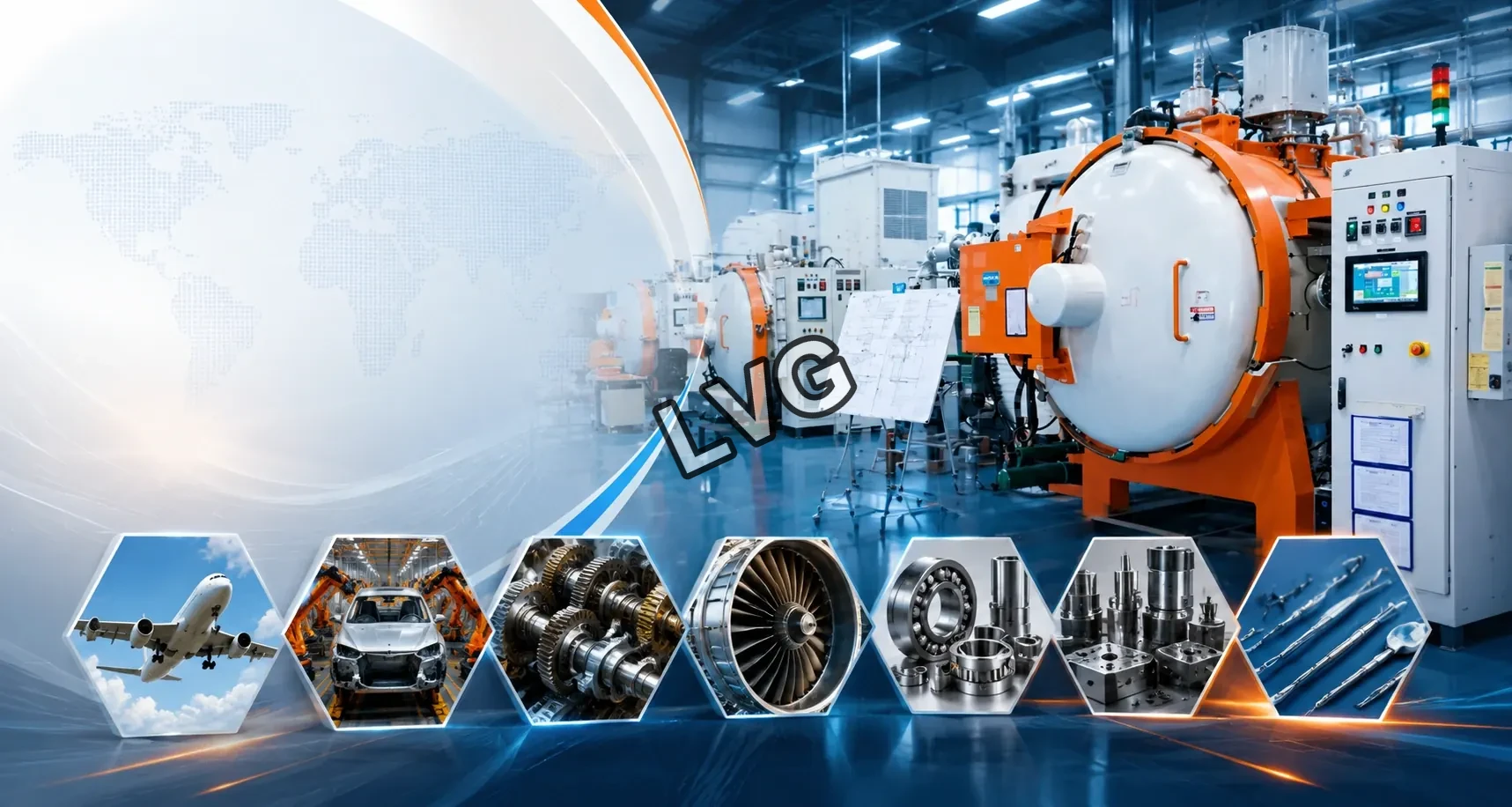
Real-world applications of our vacuum heat treatment, brazing, and sintering solutions across aerospace, automotive, and gear manufacturing industries. Each case study demonstrates measurable outcomes in precision, reliability, and performance.
Different industries, different parts — and the same three demands underneath. The properties have to land inside specification, the part has to come back dimensionally usable, and the process has to be repeatable enough that the next batch behaves like the last one.
The three application studies below show how that plays out across aerospace vacuum sintering, automotive brazing and gear manufacturing — what the requirement was, how the process was approached, and what the treatment had to deliver at the end of it.
The requirement. Aerospace components carry the tightest combination of requirements in vacuum heat treatment: specified metallurgical structure, controlled surface condition, no contamination, and records that stand up to an audit years later. The parts are rarely forgiving of a cycle that drifts.
Our approach. Sintering runs in vacuum so the charge never meets an oxidising atmosphere. Hot zone design and element layout are chosen for uniformity across the load, cooling is controlled to protect the microstructure, and the cycle is logged from start to finish. Where the customer specification is stricter than the default, the parameters follow the specification.
The outcome. Components leave with the structure and surface condition the drawing calls for, dimensional behaviour that stays predictable through downstream operations, and a batch record filed against a unique identification so the process history travels with the part.
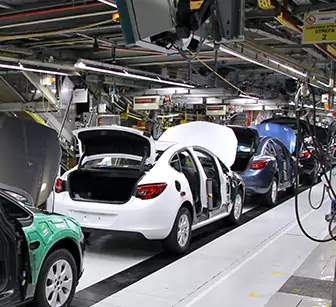
The requirement. Automotive tooling work is judged on output and consistency: joints that are strong and leak-tight, surfaces that come out clean enough to skip a second operation, and a schedule that keeps pace with production demand rather than the other way round.
Our approach. Brazing is carried out in vacuum, which removes the flux and the post-braze cleaning step along with the contamination risk. Fixturing holds assemblies in position through the cycle, heating and cooling are controlled to protect both the joint and the parent metal, and batches are scheduled so repeat work runs on a known recipe.
The outcome. Joints come out clean, uniform and free of the oxide that flux-based brazing leaves behind. Because the same recipe is used for repeat work, output stays consistent from batch to batch, and the parts arrive ready for the next operation instead of a cleaning bay.
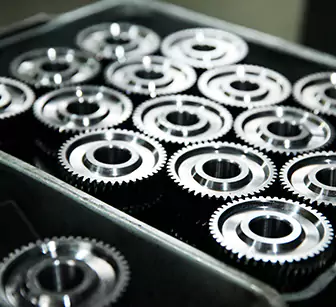
The requirement. Gears are the classic distortion problem in vacuum heat treatment. A gear that comes out of the furnace slightly oval or slightly out of pitch does not fail loudly — it fails as noise, wear and a shorter service life, long after the batch has been accepted.
Our approach. Hardening, tempering and gas quenching parameters are selected around the geometry, the grade and the distortion the part can tolerate. Fixturing and load positioning are set to support the part through the quench rather than let it find its own shape, and dimensions are checked after treatment so a deviation is caught while it can still be dealt with.
The outcome. Vacuum heat treatment stops being a variable in the gear-making process: hardness lands where the specification says it should, dimensional behaviour holds through the quench, and the finished gear performs as the design intended for the length of service life it was engineered for.
The same four steps whether the work ends up as job work at one of our units or as equipment we build.
The drawing or sample, the material grade and the properties the part has to demonstrate.
Cycle, fixturing and inspection points are selected around that requirement, not a default recipe.
Where the application is new, the cycle is developed and proven before it goes into routine production.
Production runs on the proven recipe, with each batch identified and its cycle history filed.
A working summary of the sectors, components and processes that come through our plants.
Aerospace components, automotive and tooling work, gear manufacturing, tool and die hardening, and general engineering components treated by brazing, hardening, tempering, annealing, solution treatment, nitriding or degassing.
The component drawing or a sample, the material grade, the properties the part has to demonstrate and the volume you run. From that, our metallurgists can tell you which cycle applies and what it would take to prove it.
Either. Job work runs at our vacuum heat treatment units across India, and equipment-related work — new systems, upgrades and refurbishment — is handled through our Bengaluru base and service network.
Yes, and it is the normal way we operate. Give us the standard or the customer requirement at enquiry stage and the cycle, the inspection points and the records are planned around it.
A unique batch identification, the cycle records for the furnace run, and material test reports where they are required — archived so the history is still retrievable when a customer asks about a batch months later.
Tell us the component and what it has to achieve. Contact us or submit an RFQ and the engineering team comes back with the process route, the unit that would run it and the next step.
Precision vacuum sintering for aerospace and critical components.
Read moreFlux-free vacuum brazing for automotive and industrial assemblies.
Read moreVacuum heat treatment for gears, shafts and gearbox components.
Read moreThe equipment these applications run on, built in Bengaluru.
Read moreHave a component that needs developing or processing? Contact our team or submit an RFQ.
Client testimonials and technical insights from our team.
Select a white paper below and click download to receive the PDF directly.