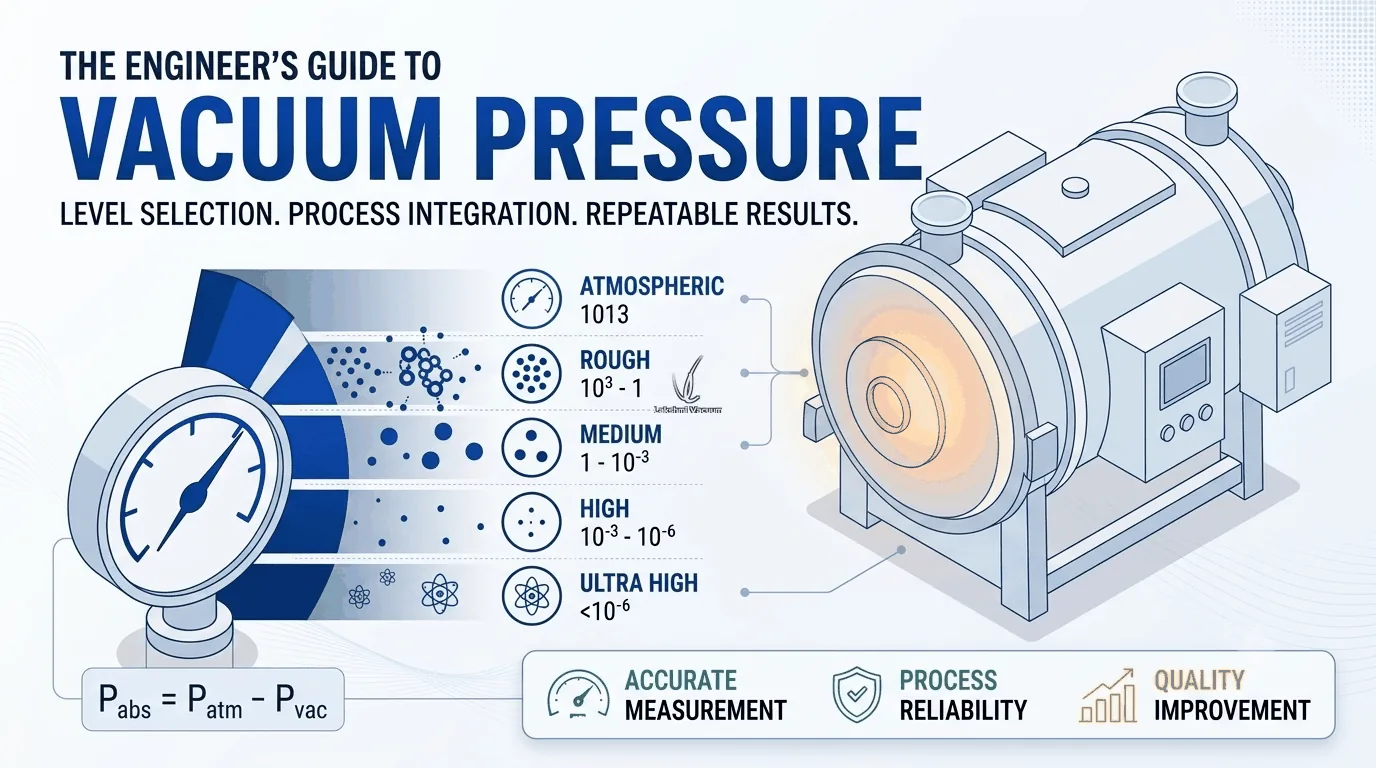
Vacuum heat treatment has revolutionized modern metallurgy, offering unparalleled control over the thermal processing of advanced materials. Unlike conventional atmospheric furnaces, an industrial vacuum furnace removes the environment itself, replacing it with a precisely controlled void. This absence of oxygen prevents oxidation, decarburization, and contamination, ensuring that high-value components emerge with bright, clean surfaces and repeatable metallurgical properties. Yet, before an engineer can specify temperature, load capacity, or quenching gas, they must possess a firm grasp of the pressure fundamentals that govern how these complex systems operate. This comprehensive guide breaks down the physics of vacuum pressure, the mechanics of pumping systems, and the exact framework required to make an informed vacuum furnace selection—and how partnering with the right manufacturer ensures those parameters are met in production.
1. Understanding Vacuum Pressure Fundamentals
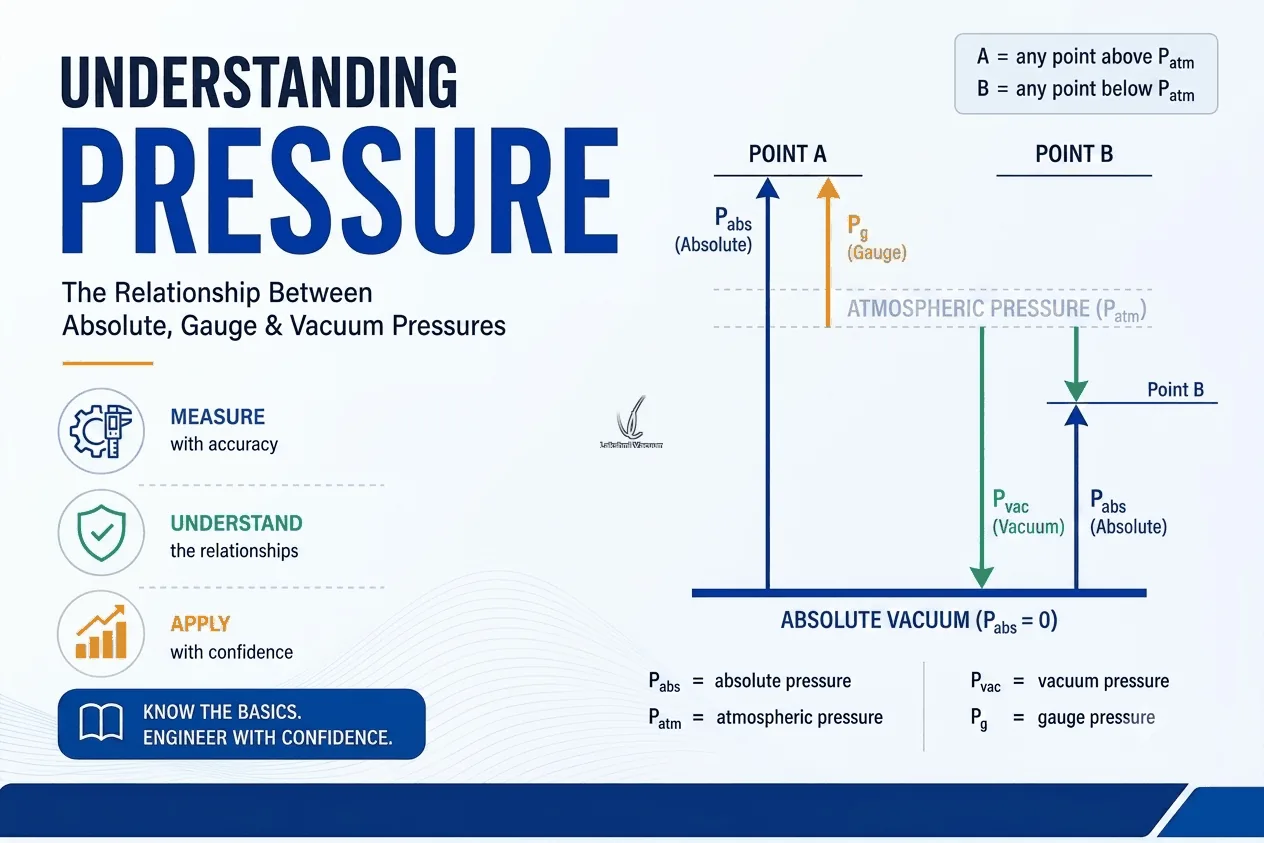
When dealing with pressure in vacuum technology, it's essential to understand the relationship between absolute pressure, atmospheric pressure, and gauge pressure. Vacuum is not a "thing" but rather the absence of matter; it is defined as any pressure below standard atmospheric pressure. In thermal processing, achieving the correct vacuum level is critical because it dictates the mean free path of gas molecules and the residual gases present within the chamber.
- Absolute Pressure (Pabs): Total pressure measured relative to a perfect vacuum (zero).
- Atmospheric Pressure (Patm): ~1013 mbar at sea level.
- Vacuum Pressure: Patm − Pabs. As absolute pressure drops, vacuum increases.
- Determines the mean free path of gas molecules.
- Dictates the residual gases present (O2, H2O, N2).
- Directly influences surface reactions on the workpiece.
Units of Measurement in Vacuum Engineering
In vacuum heat treatment, you will encounter several units of measurement. Understanding their conversions is critical for reading gauges, specifying international equipment, and complying with pyrometry standards like AMS 2750. The SI unit for pressure is the Pascal (Pa), but the industry frequently relies on millibar (mbar) and Torr.
| Unit | Symbol | Value (in Pascals) | Common Usage |
|---|---|---|---|
| Standard Atmosphere | atm | 101,325 Pa | Reference point |
| Bar | bar | 100,000 Pa | Quench pressure (2, 6, 20 bar) |
| Millibar | mbar | 100 Pa | European furnaces, vacuum level |
| Torr | Torr | 133.322 Pa | Legacy/US furnaces |
| Pascal | Pa | 1 Pa | SI Unit (Scientific) |
2. The Spectrum of Vacuum Ranges & Pumping Systems
Not all vacuums are created equal. The level of vacuum required dictates the type of pumping system, the furnace chamber design, and the metallurgical results you can achieve. Vacuum heat treatment typically operates across three main ranges, each requiring distinct pumping architectures to overcome the physical limitations of gas flow.
In vacuum heat treatment, partial pressure is often used. Instead of pulling a deep vacuum continuously, inert gases like argon or nitrogen are intentionally backfilled to a specific pressure (e.g., 1 to 10 mbar) at high temperatures. This prevents the evaporation of alloying elements (like chromium or manganese) from high-alloy tool steels, preserving the metallurgical integrity of the workpiece. Our vacuum hardening furnaces are engineered to handle these precise transitions seamlessly.
3. The Metallurgical Advantage of Vacuum
Why go through the expense of pulling a vacuum? The absence of oxygen means no oxidation occurs, leaving the workpiece with a bright, clean finish that requires no post-treatment machining. Furthermore, vacuum heat treatment ensures zero decarburization, preserving the surface hardness and fatigue strength of the steel. This is critical for aerospace and medical components where surface integrity is non-negotiable.
The Physics of Heat Transfer: In a deep vacuum, convective heat transfer is almost non-existent. Heat is transferred purely by radiation. This means the workpiece only heats up when it "sees" the radiant heating elements. This allows for incredibly uniform temperature distribution, minimizing thermal gradients and the resulting distortion in complex geometries.
Material Compatibility in Vacuum
- Tool Steels (H13, D2, A2): Benefit heavily from vacuum hardening to prevent surface scaling and maintain sharp edges on tooling.
- Stainless Steels (300 & 400 Series): Require vacuum annealing to prevent sensitization (chromium carbide precipitation) which causes intergranular corrosion.
- Superalloys (Inconel, Titanium): Highly reactive at elevated temperatures; vacuum processing is mandatory to prevent alpha-case formation in titanium and oxidation in nickel-based superalloys.
4. The Furnace Selection Framework
Choosing the right vacuum furnace requires a systematic evaluation of your production needs. It is not simply about picking the hottest or largest model; it is about matching the system's capabilities to your specific process window. An undersized furnace leads to bottlenecks, while an oversized furnace wastes energy and capital.
- Operating Temperature: Do you need 1100°C for hardening tool steels, or 1600°C for sintering ceramics?
- Vacuum Level: Does your process require 10-4 to 10-6 mbar (High Vacuum, e.g. brazing, superalloys, titanium) or will medium vacuum suffice (e.g. hardening of tool steels)?
- Quenching Method: What is the required cooling rate? Gas quenching (N2 or Ar) at 2-bar, 6-bar, or up to 20-bar, or is oil quenching required?
- Hot Zone Materials: Graphite felt/graphite heating elements (cost-effective, versatile) vs. All-metal molybdenum/tungsten shields (cleanest, required for aerospace).
- Throughput & Loading: Workpiece dimensions, total load weight, and required cycle times.
- Cycle Uniformity: Compliance with AMS 2750 standards for temperature uniformity surveys.
Gas Quenching Dynamics
Modern vacuum furnaces predominantly use high-pressure gas quenching rather than oil, owing to its cleaner operation and reduced distortion. The cooling rate is dictated by the gas type, pressure, and fan velocity. Understanding these dynamics is crucial for achieving the required hardness without cracking the part. If your process involves joining metals, explore our specialized vacuum brazing furnaces designed for flawless flux-free joints.
| Gas Type | Density | Thermal Conductivity | Application |
|---|---|---|---|
| Nitrogen (N2) | Medium | Medium | General purpose, cost-effective |
| Argon (Ar) | High | Low | Reactive materials (Titanium) |
| Helium (He) | Low | High | Ultra-fast cooling (often recovered) |
5. Partnering with a Vacuum Furnace Manufacturer
Selecting the right parameters is only half the battle. The true ROI is realized when you partner with an experienced vacuum furnace manufacturer who understands the nuances of metallurgical process control. Off-the-shelf furnaces rarely meet the exact demands of specialized production lines. Custom engineering is often required to integrate specific pumping capacities, hot zone configurations, and control systems that align with your unique manufacturing workflow.
At Lakshmi Vacuum, we don't just supply equipment; we engineer thermal solutions. Whether you are scaling up for aerospace production, automotive transmission hardening, or medical device brazing, our manufacturing capabilities ensure that your furnace is built to exacting standards, delivering repeatable AMS 2750 compliance and decades of reliable operation. Beyond manufacturing, we also offer comprehensive vacuum heat treatment services to support your outsourcing needs.
6. Industry Applications
7. Conclusion
The right vacuum furnace selection starts with understanding pressure fundamentals, then systematically matching process requirements to furnace capabilities. By accurately defining your temperature, vacuum level, and quenching parameters, you ensure optimal metallurgical results, lower operating costs, and decades of reliable thermal processing. Investing in the right vacuum technology—and the right manufacturer—is an investment in the quality and longevity of your manufacturing capabilities.
The vacuum level depends on the process. Hardening of tool steels and sintering are typically done in the medium vacuum range, while brazing and heat treatment of superalloys and titanium call for high vacuum, typically 10-4 to 10-6 mbar.
Cooling rate is directly tied to gas density. Higher quench gas pressure raises gas density and significantly increases the cooling rate. High-pressure gas quenching (up to 20-bar) can replace oil quenching for certain steel grades, offering a cleaner, distortion-minimizing alternative.
Yes. As a dedicated vacuum furnace manufacturer, we specialize in custom engineering. From specific hot zone dimensions to integrated material handling systems and advanced PLC controls, we tailor the furnace to your exact production footprint and metallurgical requirements. Request a quote today.
Ready to Upgrade Your Heat Treatment Capabilities?
Whether you are looking to purchase a new industrial vacuum furnace, upgrade your existing thermal processing line, or need expert consultation on furnace selection, our engineering team is ready to support your manufacturing goals.
Direct Access: Need Immediate Contacts?
Skip the form and reach out to our vacuum furnace manufacturing team directly using the details below.